 The Foundation of Property Ownership
Before the deed is signed, the keys are transferred, or the blueprints are brought to life, an invisible framework dictates every real estate transaction. That framework is the title.
In the world of luxury residential real estate and commercial property investment, a title is not a physical piece of paper you store in a safe deposit box. It is an abstract legal concept representing the sum total of your rights to possess, use, modify, and transfer a piece of land and the structures built upon it.
If a house is a physical asset, the title is its legal provenance. It records the complete history of who built the property, who owned it across generations, and whether you possess the absolute authority to call it your own.
Deed versus Title: Understanding the Distinction
Even experienced market participants frequently confuse the deed with the title. While closely linked in every closing, they perform distinct functions in property law.
The Deed Is the Legal Instrument
A deed is a physical, written document. It serves as the official legal instrument that transfers ownership from seller to buyer. Think of the deed as the vehicle that conveys property from one party to another on closing day.
The Title Is the Legal Status
A title is the intangible status of owning the asset. You cannot hold a title in your hand. Instead, holding title means you possess the complete rights and protections associated with property ownership under the law.
To use a financial analogy: if a deed is the bill of sale for a company’s shares, the title is the actual equity interest giving you voting rights and dividend entitlements.
The Bundle of Rights: The Five Pillars of Ownership
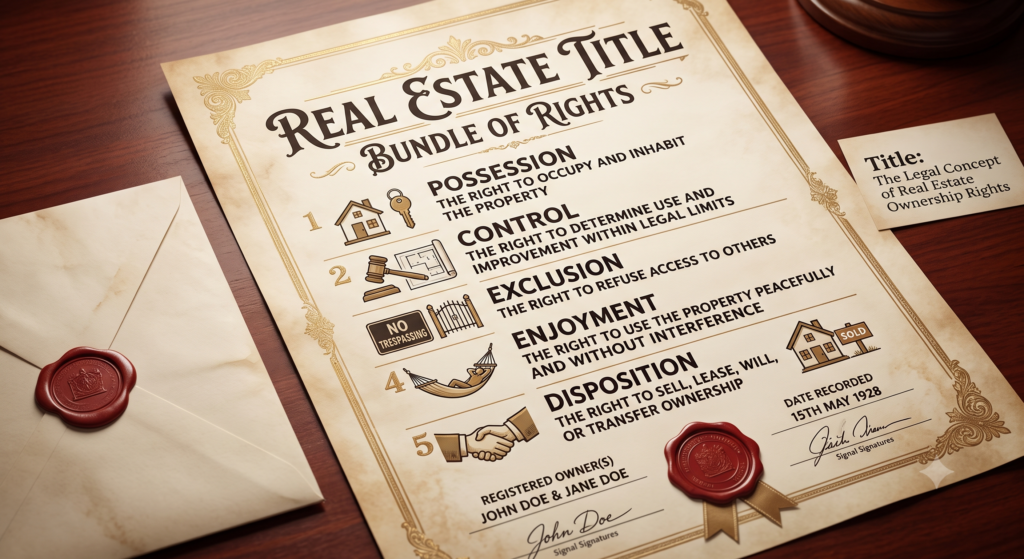
Holding clear title grants far more than a physical address. It conveys what legal scholars call the Bundle of Rights. In real property law, ownership is viewed as a bundle of individual privileges. When you acquire clear title, you hold the entire bundle.
1. The Right of Possession
This is the fundamental entitlement to occupy the property. Holding title establishes your legal right to reside on the land, giving you authority superior to outside claims.
2. The Right of Control
The right of control grants you the power to manage, alter, and develop the real estate. Subject to municipal zoning laws and local regulations, you maintain the autonomy to renovate, expand, or redesign the property to suit your needs.
3. The Right of Quiet Enjoyment
Ownership guarantees protection from unlawful interference. The right of quiet enjoyment legally ensures you can occupy and use your property without disturbance or competing claims from former owners or third parties.
4. The Right of Exclusion
Your property is a private asset. The right of exclusion empowers you to control access, determining who may enter the premises and who may not, with narrow exceptions for public utilities or emergency services.
5. The Right of Disposition
The ultimate power of ownership is the right to transfer it. Disposition allows you to sell, lease, mortgage, gift, or pass the property to heirs through an estate plan.
Clear Title versus Clouded Title: Protecting Capital
In every transaction, the primary goal of the buyer, lender, and closing attorney is to secure Clear Title, often referred to as Marketable Title.
A clear title means the property’s historical record is clean, unbroken, and free from external claims that could threaten your equity or ownership rights.
Conversely, a Cloud on Title represents a flaw or outstanding claim attached to the property’s legal record. A cloud creates uncertainty, jeopardizes ownership, and can freeze a transaction entirely.
Primary Threats to Clear Title
Municipal and Tax Liens
If a previous owner failed to pay local property taxes or municipal fees, government entities can place a lien against the property. These liens attach to the real estate itself rather than the individual. Without resolution, a new buyer can inherit substantial tax liabilities.
Contractor and Mechanic Liens
When property renovations are performed, contractors, architects, and suppliers have the legal right to file a mechanic lien if they are not paid in full. Unsettled bills from past construction work can linger on the title as an active legal encumbrance.
Heir and Probate Surprises
Properties with rich histories often pass through multiple generations. If a past owner died without a clear will, or if an unrecorded heir surfaces years later, it can trigger complex legal litigation over true ownership.
Boundary and Easement Disputes
Established estates often feature shared driveways, historical fences, or agreements regarding access. Unrecorded easements or boundary encroachments can cloud a title and restrict your intended use of the land.
Record Errors and Fraud
Human error in public record keeping is a persistent risk. A misspelled name on a recorded deed from decades past or an unfiled mortgage satisfaction can break the legal chain. Fraudulent conveyances, such as forged signatures on historical transfers, can call the legitimacy of subsequent sales into question.
The Title Search: Investigating Property History
To ensure clear title at closing, a licensed title examiner or attorney conducts a systematic Title Search. This process involves a comprehensive review of public records in the municipality where the property sits.
During a title search, examiners analyze:
-
Historical deeds and land grants
-
Mortgages, deeds of trust, and lien releases
-
Tax records and municipal assessments
-
Probate filings, court judgments, and divorce decrees
-
Property surveys and recorded plat maps
The goal of the search is to trace an unbroken Chain of Title, showing every sequential owner from the original grant to the present day. If the chain is intact, ownership passes cleanly. If a gap appears, it must be resolved before title can transfer.
Title Insurance: Institutional Risk Mitigation
Even a thorough title search cannot uncover hidden defects outside the public record. Forged documents, secret wills, or fraudulent transfers can surface long after a purchase closes.
This risk makes Title Insurance an essential safeguard. Unlike traditional policies that cover future losses, title insurance protects against past events that could imperil your ownership today.
Lender Policy versus Owner Policy
1. Lender Title Insurance
If you finance a purchase with a mortgage, the lender requires a Lender Title Insurance Policy. This policy protects the bank financial interest up to the outstanding loan balance, decreasing as the principal is paid down.
2. Owner Title Insurance
An Owner Title Insurance Policy protects the buyer equity directly. Issued for the full purchase price of the property, it safeguards your financial investment and legal rights.
-
Single Premium: Unlike property or casualty insurance requiring ongoing premiums, owner title insurance is paid once at closing.
-
Permanent Coverage: Protection remains active for as long as you or your heirs hold an interest in the asset.
-
Legal Defense: If a covered title dispute arises, the insurer provides legal representation and covers court costs, defending your rights or compensating losses up to the policy limit.
Essential Real Estate Title Glossary
| Term | Legal Definition and Context |
| Abstract of Title | A written summary detailing the complete recorded history of a property, including transfers, liens, and legal proceedings. |
| Encumbrance | A legal claim, lien, or liability attached to property that diminishes value or restricts use without stopping transfer. |
| Quiet Title Action | A formal court lawsuit filed to establish clear ownership and eliminate competing claims or defects on a title. |
| Quitclaim Deed | A deed transferring whatever interest the seller holds in a property without providing warranties regarding title validity. |
| Warranty Deed | A deed guaranteeing the seller holds clear title, has the right to sell, and will defend the buyer against future claims. |
Capitalizing on Clear Ownership
Real estate represents one of the most significant asset classes in wealth creation and preservation. Understanding title mechanics, from the Bundle of Rights to Title Insurance protection, ensures your real estate investments remain secure, marketable, and legally sound across generations.