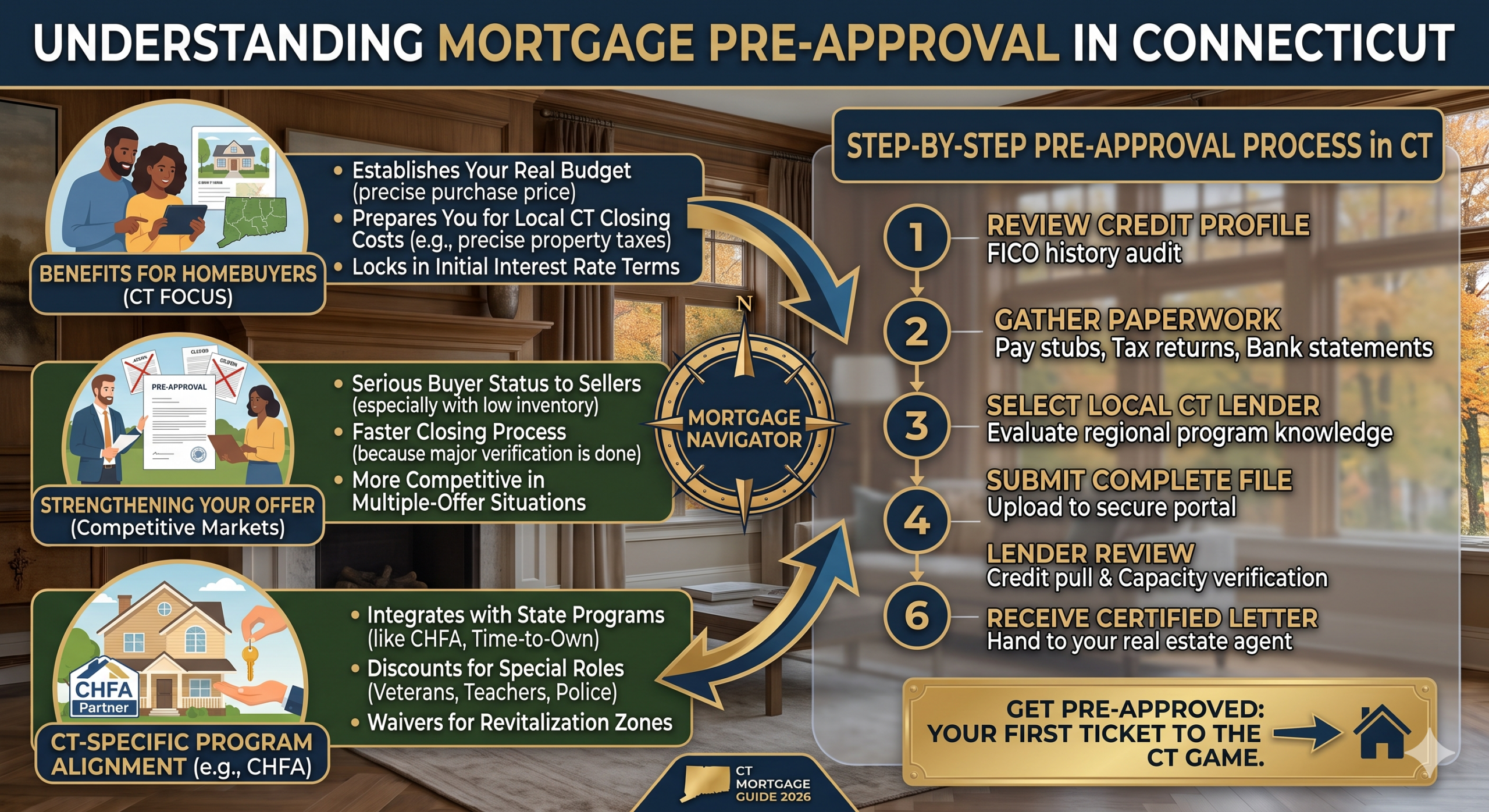
In the Connecticut real estate market, a Mortgage Pre-Approval is your ticket to the game. With low housing inventory across the state—from the suburban neighborhoods of Hartford County to the competitive markets of Fairfield County—sellers will rarely look at an offer unless it includes a formal pre-approval letter.
A pre-approval is a conditional commitment from a lender stating exactly how much money they are willing to lend you. Unlike a quick online pre-qualification, which relies on unverified numbers you type into a form, a true pre-approval requires a deep dive into your financial background.
Call William Lavigne on his cell for the fastest service: 860-585-6285
connecticut1@gmail.com
1. The Core Benefits of Pre-Approval
Getting pre-approved does more than just check a box for a seller. It fundamentally changes how you look for a home:
-
Establishes Your Real Budget: It tells you exactly what your maximum purchase price can be, protecting you from falling in love with a home outside your financial reach.
-
Strengthens Your Offers: In competitive multiple-offer situations, sellers favor buyers with local pre-approvals because it proves the buyer has the financial backing to close the deal.
-
Locks in Local Disclosures: A local Connecticut lender can calculate precise estimates for property taxes and homeowners insurance, which vary wildly by town across the state.
-
Speeds Up the Final Approval: Because an underwriter reviews your primary income and asset documents early on, the time between a signed contract and closing day drops significantly.
2. The Connecticut Factor: Local Program Alignment
When you seek a pre-approval in Connecticut, it pays to work with a lender who understands state-specific programs. The Connecticut Housing Finance Authority (CHFA) offers highly competitive homebuyer programs that stack directly onto standard mortgages.
During your pre-approval consultation, check if you qualify for these specific state enhancements:
-
CHFA First Mortgage: Offers below-market interest rates for low-to-moderate-income buyers, which can increase your overall purchasing power.
-
Time to Own Program: A state-backed, forgivable down payment assistance program that provides secondary financing for qualifying first-time buyers.
-
The Special Discount Tier: CHFA shaves an additional 0.125% off your interest rate if you are an active military member, a veteran, a teacher in a state alliance district, or a police officer.
-
Targeted Areas: If you choose a home in an IRS-designated revitalization zone (such as specific neighborhoods in Waterbury, New Britain, or Bridgeport), CHFA waives the first-time homebuyer rule and drops your rate by 0.25%.
3. The Financial Baseline: What Lenders Evaluate
Lenders use a manual framework called the Four C’s of Underwriting to determine your pre-approval limit:
The Underwriting Matrix
  │
  ├── Credit (FICO history and repayment reliability)
  ├── Capacity (Debt-to-Income calculation)
  ├── Capital (Down payment and asset reserves)
  └── Collateral (The condition and value of the home)
Credit Score Expectations
Your credit score dictates which loan types you can access and how much your interest rate will cost:
-
620 Baseline: The minimum score required for standard conventional loans.
-
580 Baseline: The baseline to qualify for an FHA loan with a minimal 3.5% down payment.
-
740+ Tier: The zone that unlocks the absolute lowest rates and cheapest private mortgage insurance (PMI) premiums.
Debt-to-Income (DTI) Ratios
Lenders compare your gross monthly income against your recurring monthly debts (credit cards, auto loans, student loans, and your proposed new housing payment). Most standard conventional programs prefer your total backend DTI to remain under 43%, though government programs like FHA can allow higher ratios with strong compensating factors.
4. The Pre-Approval Paperwork Checklist
To issue a certified pre-approval letter, a lender must verify your financial claims. Collect these documents before your first meeting to keep the process moving smoothly:
Income Verification
-
[ ] Consecutive pay stubs covering the last 30 days.
-
[ ] W-2 tax forms from the two most recent calendar years.
-
[ ] Complete federal personal tax returns from the last two years (essential if you earn commissions, bonuses, or are self-employed).
Asset Proof
-
[ ] Full bank statements (checking and savings) from the last 60 days. Ensure every numbered page is included, even if blank.
-
[ ] Recent statements for investment or retirement accounts (401k, IRA, brokerage funds).
-
[ ] Signed gift letters if a family member is contributing cash toward your down payment.
Identity and Legal Documents
-
[ ] Valid government-issued photo ID (driver’s license or passport).
-
[ ] Social Security number for a formal credit pull.
-
[ ] Final divorce decrees or child support agreements detailing any monthly financial obligations or income.
5. Step-by-Step Guide to Securing Your Pre-Approval
6. What NOT to Do After Getting Pre-Approved
A pre-approval is a conditional snapshot of your financial health at a specific moment. The commitment is valid for 60 to 90 days. Any major shift in your employment, credit, or assets can void the letter and derail your purchase.
To protect your home loan status while house hunting, follow these strict rules:
-
Do Not Change Jobs: Avoid switching careers, moving from a salary to a commission-based role, or becoming self-employed right before or during your home search.
-
Do Not Make Large Purchases: Do not buy a new car, finance furniture, or open new store credit cards. These actions alter your debt-to-income ratio and pull down your credit score.
-
Do Not Move Money Around: Keep your cash reserves stable. Avoid shifting large balances between accounts or depositing cash that cannot be traced with a clear paper trail.
-
Keep Paying Bills on Time: A single missed or late credit card payment during your home search can tank your score and wipe out your loan eligibility.
Final Summary
Securing a mortgage pre-approval is the most important early step in your homebuying journey. By verifying your credit score, checking your income, and exploring local programs like CHFA down payment assistance, you can establish a clear budget and show sellers you are a serious buyer. Keeping your financial profile stable during this phase ensures a smooth transition from a pre-approval letter to holding the keys to your new Connecticut home.