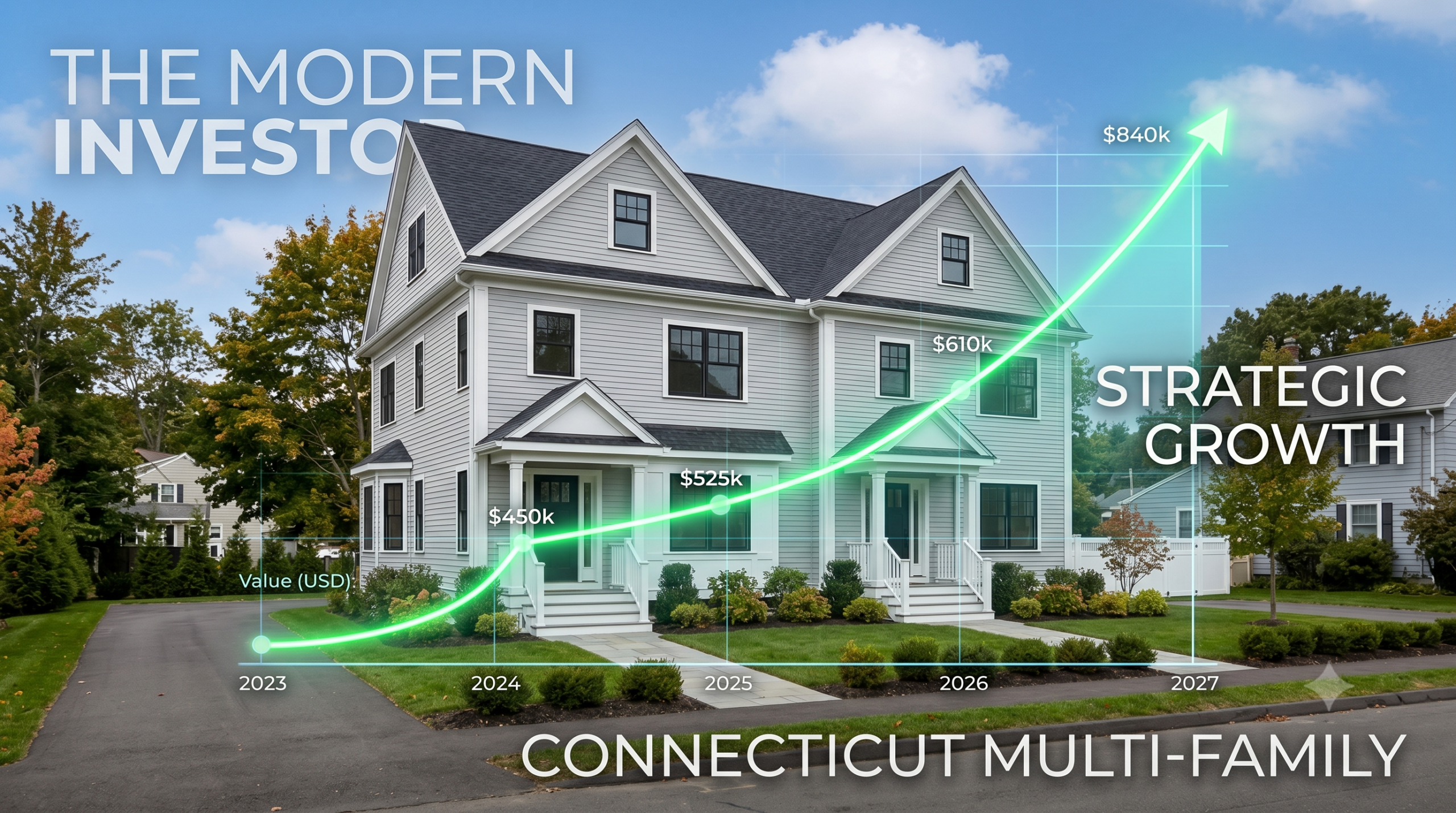
 Unlocking the Data: Tracking the Historic Surge in Connecticut’s Multi-Family Housing Market
Get the PDF Right Now For Free
For real estate investors, housing analysts, and homebuyers alike, navigating market shifts requires clear, data-driven insights. The June 2026 SmartMLS® Market Snapshot for Multi-Family properties offers a goldmine of information . Covering data from 2013 through mid-2026, this report outlines a market that has transitioned from steady post-recession recovery into an incredibly competitive, high-value landscape .
Here is a breakdown of what the data shows and how to interpret the metrics to make smarter real estate decisions.
1. The Big Picture: A Decade of Explosive Growth
The most striking trend in this data packet is the long-term appreciation of multi-family assets . By looking at the Yearly Sales & Pricing metrics, we can see an uninterrupted upward trajectory in property values over the last decade :
-
2013: The median sale price sat at a modest $130,000 with an average price per square foot ($/sqft) of $61 .
-
2020: Property values grew steadily, reaching a median of $238,000 ($99/sqft) .
-
2026 (Year-to-Date): The median sale price has skyrocketed to $450,000, with the average cost per square foot climbing to $191 .
How to interpret this:
This massive growth—where median prices have more than tripled since 2013—highlights the robust demand for multi-family real estate in Connecticut . Multi-family homes (such as duplexes and triplexes) are heavily favored by investors for rental income and by primary buyers using “house-hacking” strategies to offset high mortgage rates.
2. Supply vs. Demand: A Classic Inventory Crunch
While prices are near historic highs, the actual volume of transactions (# of Sales) tells a different story about market mechanics :
-
The Peak (2021): The market saw a frenzy of activity with 4,992 sales .
-
The Contracting Supply (2022–2025): Sales volume fell to 4,238 in 2022, and leveled off near 2,980 sales in 2025 .
-
New Listings Trend: Looking at the “New Listings Delivered” table, the inventory remains tight . For example, January new listings dropped from 342 in 2025 down to 290 in 2026 .
How to interpret this:
When sales volume decreases while prices continue to rise, it is a textbook sign of an inventory shortage, not a lack of buyer interest. Current property owners are likely locked into low mortgage rates from previous years and are hesitant to sell. Because fewer new listings are hitting the market, buyers are forced to compete aggressively for a limited pool of available multi-family properties .
3. Speed and Competition: Days on Market (DOM)
The Buyer Demand metrics provide a window into how intensely buyers are competing .
-
In 2013, the median Days on Market (DOM) was 49 days . Property sales were relatively slow.
-
By 2024, median DOM plummeted to an ultra-fast 12 days . As of mid-2026, it sits at just 15 days .
Furthermore, the % Over/Under Asking metric shows that for the last several years, properties have routinely closed for more than their initial list price . In May 2026, properties closed at an average of 2.7% over asking price .
How to interpret this:
A low DOM combined with closing prices that exceed asking prices signals an intense Seller’s Market . Properties are going under contract in about two weeks . Buyers entering this market must be prepared to act immediately, make clean offers, and expect potential bidding wars .
4. Dissecting the Market by Price Range
The snapshot breaks down buyer behavior by price tiers between December 2025 and June 2026, revealing exactly where the market is hottest :
-
The Sweet Spot ($300k – $499k): This range saw the highest density of activity, accounting for a massive chunk of total sales (339 sales in the $300k range and 389 sales in the $400k range) . These tiers saw properties sell for 1.53% to 2.2% over asking price .
-
The Luxury Tier ($2M+): Luxury multi-family units are a completely different animal, with only 6 sales, a median DOM of 128 days, and closing at 3.66% under asking .
How to interpret this:
If you are looking at multi-family homes under $600,000, you are entering the most competitive segments of the Connecticut market . Properties in these brackets sell fast and frequently command premium bids . Conversely, the luxury multi-family tier ($2M+) is moving much slower, giving affluent buyers significantly more room to negotiate lower prices .
Summary Checklist for Decision-Makers
-
For Investors: Yields may be squeezed by rising acquisition costs ($191/sqft YTD), but the speed of the market suggests that demand for housing units remains incredibly tight .
-
For Sellers: The data shows that the first half of 2026 remains a premium time to sell . Low inventory means your property will stand out, sell quickly, and likely fetch near or above your asking price if priced accurately .
-
For Buyers: Patience and financial readiness are key. Focus on the under-$300k or over-$1M brackets if you want to avoid the heaviest bidding wars .