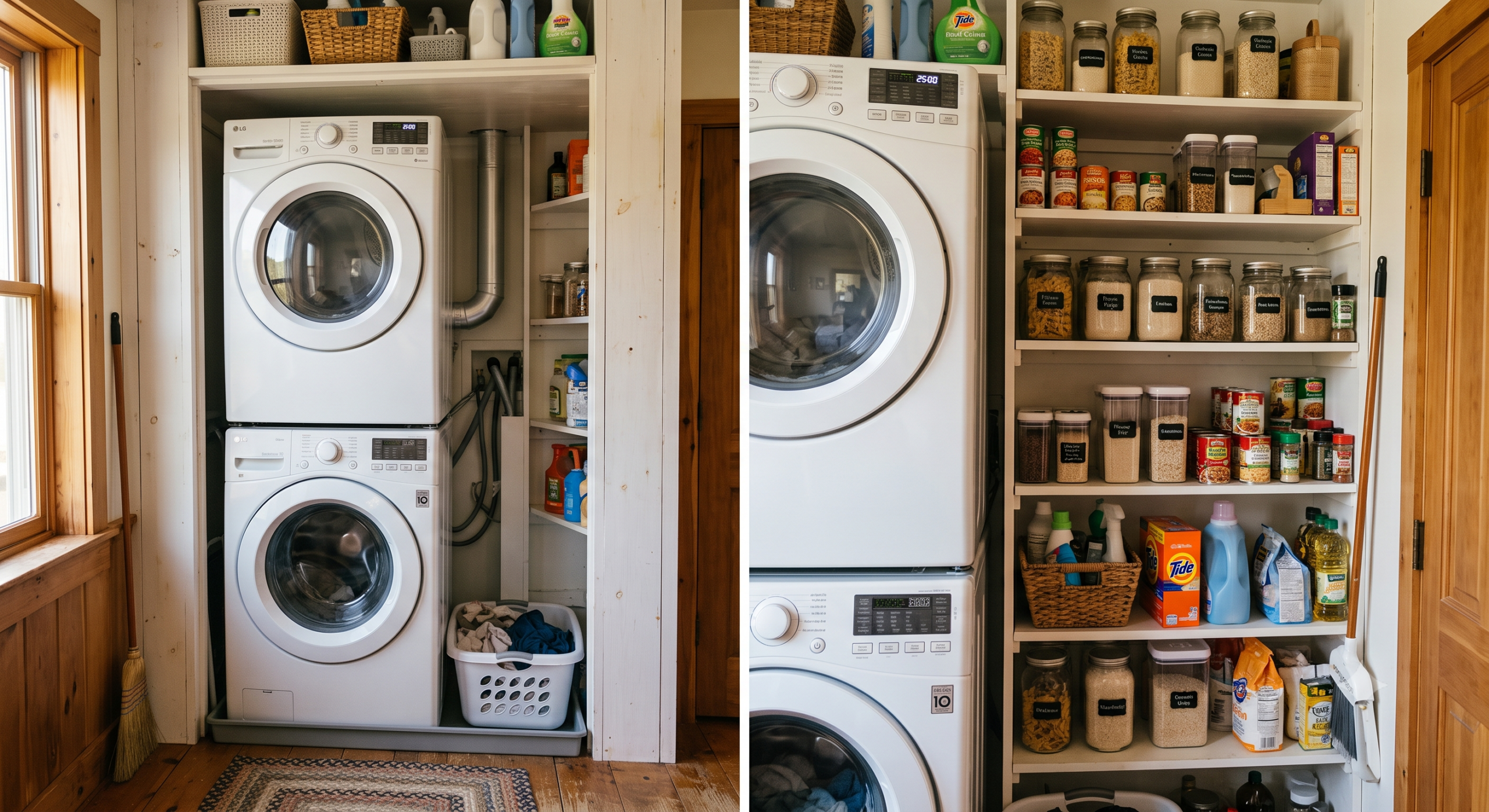
 If your main goal is attracting and keeping premium tenants, there is only one clear winner: In-unit laundry.
High-earning renters view a private washer and dryer as a non-negotiable requirement. For these tenants, dragging clothes down to a basement—no matter how clean or safe it is—feels like a massive step backward. If you don’t offer it in the apartment, they will simply filter your property out of their search.
Here is the simple breakdown of how to get those premium renters while protecting yourself from the liabilities you’re worried about.
Why In-Unit Wins the Best Tenants
-
Higher Rents: You can charge a $100 to $175 monthly premium just for adding private machines.
-
Longer Leases: Tenants who have in-unit laundry stay in their apartments much longer, which saves you thousands in turnover costs.
-
Faster Filling: Vacant apartments flip incredibly fast when they feature modern, private machines.
How to Handle the Liability (The Smart Landlord’s Playbook)
You don’t have to choose between great tenants and safety. You can have both by taking three simple, low-cost steps during installation to completely eliminate the risk of water and fire damage:
-
Use Smart Shutoff Valves: Install an automatic water shutoff system (like Floodstop). It places a small sensor on the floor under the washing machine. If the machine leaks even a single drop of water, the sensor automatically shuts off the main water line instantly.
-
Install a Drain Pan: Always put a plastic or metal overflow pan under the washing machine and pipe it directly into your wastewater lines. If a hose bursts, the water goes down the drain, not into your subfloor.
-
Ban Flexible Foil Dryer Vents: Only use smooth, rigid metal ducts for the dryer vent. Flexible foil or plastic tubes trap lint easily and create fire hazards; rigid metal keeps the air moving safely outside.
The Bottom Line
If you want premium tenants, put the laundry inside the apartment. Just treat the installation like a commercial project—spend a little extra upfront on leak prevention and rigid venting, and you will get the high rents you want without the sleepless nights.
Here is the hard data to back up the strategy. When you are re-engineering the architecture of your asset, you shouldn’t just guess what tenants want or what underwriters fear. You need the receipts.
Here is exactly what the top national surveys and risk actuaries are telling the multifamily industry right now.
The Revenue Proof: Why Premium Tenants Demand It
The data is unanimous. For high-earning renters, shared basement laundry is a relic of the past, and private machines are the undisputed king of amenities.
“Among the features that renters cited as most important are an in-unit washer/dryer (93%).”
— National Multifamily Housing Council (NMHC), 2024 Renter Preferences Survey Report
Read the NMHC Report Data (See NMHC’s comprehensive breakdowns on baseline apartment features).
“Tied for the most coveted amenity is the in-unit washer/dryer. Gone are the days when renters were satisfied with shared laundry facilities or resolved to lug heavy loads of laundry to off-site laundromats.”
— Multifamily Executive Magazine
“Across 13 top metro areas, in-unit washers and dryers command a 10% per month premium on average. Those living in Philadelphia pay the biggest premium for in-unit laundry to the tune of 20%.”
— Trulia Real Estate Research
The Risk Proof: Why Engineering Matters
The liability is real. A braided hose under pressure is a ticking clock, but commercial insurers and claims adjusters actively reward landlords who out-engineer the problem with modern smart valves and strict containment.
“Water damage is the single most frequent claim type in habitational property insurance, by a wide margin over fire, wind, and theft combined… Insurance Information Institute claim data shows water damage and freezing accounting for roughly 30% of all property claims.”
— Latent Insurance, Multifamily Risk Playbook
“Larger buildings are increasingly required to install leak-detection technology to maintain admitted-market eligibility… A building that historically averages one supply-line claim every 2 to 3 years pays back the installation in 3 to 5 years through avoided deductibles alone, before counting premium credits.”
— Latent Insurance on the ROI of Smart Shutoffs
“During a custom and tailored on-site risk assessment of your property, we identify current issues, potential concerns, and opportunities for solutions such as smart leak detectors. [Our approach] helps you avoid claims on the liability side by focusing on preventing damage.”
— HUB International (Global Insurance Broker)
The takeaway is bulletproof: The market will hand you top-tier rents for putting the appliances inside the apartment. Your job is to take a fraction of that new revenue and invest it in localized, smart-sensor shutoff valves. You capture the premium lifestyle renter, and you wall off the building from catastrophic risk.
RISK
The risk of property damage from a washing machine leak is often compared to the risk of a personal injury lawsuit when a tenant is forced to carry laundry off-site. Forcing premium tenants to transport heavy, bulky laundry baskets up and down stairs and across a driveway to an off-site laundromat creates a specific premises liability trap.
Under Connecticut law, this scenario shifts a landlord’s exposure from a manageable property damage claim to a high-exposure bodily injury lawsuit against your Commercial General Liability (CGL) policy.
1. The Legal Standard: The Common Area Mandate
In Connecticut, landlords retain absolute control—and therefore absolute liability—for the upkeep of all common areas, including stairways, walkways, and driveways (Jacobs & Jacobs, LLC).
The Constructive Notice Trap: Under Connecticut premises liability law, you don’t have to actively know a hazard exists to be sued. If a crack in the driveway, a loose stair handrail, or a patch of ice has been there long enough that you should have found it via a reasonable inspection, you have “constructive notice” and are legally liable (Gould Injury Law).
2. The Mechanics of the Accident: Bulky Loads vs. Defects
When a tenant carries a massive, unbalanced basket of clothes down your stairs or across your driveway, their risk profile skyrockets due to three factors:
-
Obstructed Line of Sight: A tenant carrying a high laundry basket cannot see their own feet or the ground directly in front of them. If there is a slight lip in the concrete, a cracked step, or a patch of black ice on the driveway, they will trip or slip blindly.
-
Altered Center of Gravity: Carrying 20 to 30 pounds of shifting weight makes it incredibly difficult to recover from a minor stumble. A small trip that might normally result in a stubbed toe turns into a catastrophic, tumbling fall.
-
Inability to Catch Themselves: Because both hands are occupied gripping the laundry basket, the tenant cannot grab a handrail or break their fall with their arms. This directly increases the severity of the injury—resulting in fractures, head trauma, or spinal injuries rather than simple bruises.
3. The Litigator’s Dream: Connecticut Comparative Fault
Landlords often assume that if a tenant trips while carrying a massive load, the court will blame the tenant for being careless. However, Connecticut operates under a modified comparative negligence standard ($C.G.S. \ \S 52-572h$).
As long as the tenant is deemed 50% or less at fault for the fall, they can still recover massive damages from your insurance company. A plaintiff’s attorney will easily argue:
-
Doing laundry is a basic human necessity.
-
The landlord failed to provide an on-site solution, forcing the tenant to transport heavy loads across common areas.
-
Therefore, the landlord should have anticipated this heavy foot traffic and kept the driveway and stairs meticulously flawless.
If the jury decides you were 51% responsible for not fixing a minor driveway pothole or poorly lighting a staircase, you lose the case.
The Liability Comparison: Water vs. Bodily Injury
+------------------------+------------------------------------------+------------------------------------------+
| Asset Metric           | In-Unit Laundry Risk (Water Leak)        | Off-Site Laundry Risk (Slip & Fall)      |
+------------------------+------------------------------------------+------------------------------------------+
| Financial Exposure     | Predictable property damage ($5k-$25k)   | Unpredictable personal injury ($100k+)   |
+------------------------+------------------------------------------+------------------------------------------+
| Insurance Deductible   | Standard property deductible ($1k-$5k)   | High litigation costs, skyrocketing CGL   |
|                        |                                          | premiums, or policy non-renewal.         |
+------------------------+------------------------------------------+------------------------------------------+
| Control Factor         | High. You can install smart shutoff     | Low. You cannot control weather, human   |
|                        | valves, pan drains, and rigid ducts.     | balance, or a tenant's physical fatigue. |
+------------------------+------------------------------------------+------------------------------------------+
Summary
When you choose not to offer laundry because you are afraid of a pipe leaking, you are trading a highly controllable property risk for a volatile human risk. A water leak damages drywall, which can be cut out and replaced for a few thousand dollars. A broken hip or a traumatic brain injury on your winter driveway can easily exhaust your CGL policy limits and trigger a personal umbrella claim.
Providing in-unit laundry keeps tenants inside their apartments, off your staircases, and off your driveway.
